July 16, 2026
how I turned one corner of my apartment into a sanctuary room (and why my brain is quieter there)
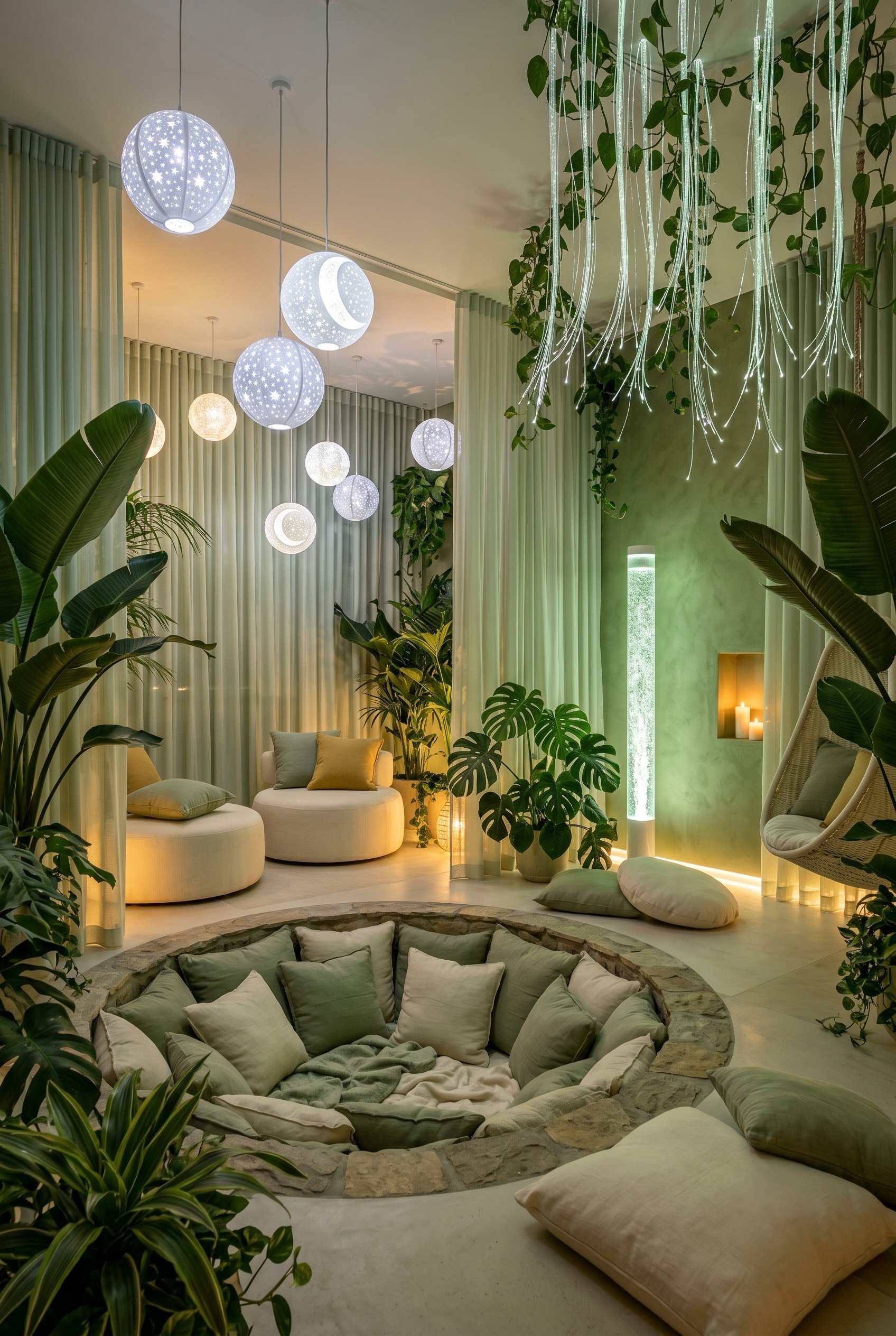
ok hear me out: you don’t need a spare room to have a sanctuary room.
For the longest time I thought I did. I’d scroll past those dreamy meditation room photos — floor cushions, warm light, plants everywhere — and file them under “things for people with guest rooms.” My apartment has exactly zero extra rooms. What it did have was a sad corner between my bookshelf and the window where I kept a laundry chair. You know the chair.
Last year I swapped the laundry chair for a floor cushion and a lamp. That’s it. That was the whole renovation. And somehow that 1.5 square meters became the place my brain actually goes quiet.
I’m not saying a corner changed my life. I’m saying I now have one spot in my home where my nervous system knows what to do — and honestly, that’s more than I expected from a cushion and a lamp.
why a “sanctuary corner” works (when the whole apartment doesn’t)
Here’s the thing I didn’t understand at first: my apartment wasn’t stressful because it was small. It was stressful because every spot in it meant five different things. My couch was where I worked, ate, doomscrolled, and occasionally napped. My bed was where I slept and also answered emails at 11pm (I know, I know).
When one place holds that many jobs, your brain never fully lands anywhere. You sit down to rest and part of you is still scanning — the laptop is right there, the laundry is right there, the everything is right there.
A sanctuary corner flips that. It’s one small space with exactly one job: nothing. You don’t work there, you don’t scroll there, you don’t fold laundry there. Over a few weeks, the corner itself becomes a cue. Sitting down there started to feel like my shoulders got the memo before my mind did.
If you have an ADHD-ish brain like me, this matters even more. Willpower-based relaxing (“I will now sit on this multi-purpose couch and be calm”) has never once worked for me. Environment-based relaxing — walking to a spot that only exists for slowing down — actually does, because the space does the remembering for me.
the 5 steps (roughly 1 weekend, under $200)
You can absolutely do this slower or cheaper. This is just the version that worked for me.
step 1 — claim the corner (30 minutes, $0)
Pick the most “nothing” corner you have. Mine was next to a window, which I recommend if you can get it — natural light does a lot of free work. Clear everything out of it. Yes, including the chair.
The rule I set for myself: nothing lives in this corner unless it’s for slowing down. No storage overflow, no “temporary” boxes. The corner is spoken for now.
step 2 — get your body on the floor (the cushion, ~$60-80)
The single biggest upgrade was a proper floor cushion. Sitting on the floor sounds like a downgrade until you have a cushion that actually supports you — then it’s giving cozy little nest, and your body reads “floor” as “off duty” in a way a couch never quite manages.
Look for something wide enough to sit cross-legged on, firm enough that your hips don’t sink to the ground. A big flat zabuton-style cushion or a meditation pillow both work.
step 3 — fix the lighting (the lamp, ~$25-40)
Overhead lights are the enemy of any calm corner, no cap. Big ceiling light = office energy. What you want is one small, warm, low light source at roughly eye level or below when you’re seated.
I use a little dimmable lamp on the floor beside the cushion, set to its warmest setting. Turning it on has become the “we’re doing this now” switch. String lights also work if that’s more your vibe — the point is warm and low, not bright and overhead.
step 4 — add one scent and one texture ($20-40)
This is where the corner stops being “a cushion on the floor” and starts being a place.
Scent: a diffuser with whatever smell reads as calm to you. For me it’s lavender in the evening and something citrusy on weekend mornings. Because I only run it in the corner, that scent now belongs to the corner — my brain does an automatic gear-shift when it hits.
Texture: one soft thing. A small rug, a folded blanket, a throw you only use here. Something your hands can fidget with counts double if you’re neurodivergent.
step 5 — set the “one job” rule ($0, ongoing)
The corner only works if it keeps its one job. My rules, written on a sticky note for the first month:
- No phone in the corner (it charges across the room)
- No work, no laundry, no snacks-while-scrolling
- It’s allowed to be a 3-minute visit — showing up counts
That third rule is the important one. Some days I sit there for twenty minutes with tea. Some days it’s ninety seconds of staring out the window between meetings. Both count. The corner isn’t a performance space, it’s a landing pad.
what I actually keep in my sanctuary corner
Quick disclosure before the recs: some links below are affiliate links, which means I may earn a small commission if you buy through them — at no extra cost to you. I only include things I actually use in this exact corner.
1. The floor cushion. My personal favorite is a wide zabuton-style one — big enough to sit cross-legged with room to spare, firm enough for 20+ minutes without my legs going numb. If you buy one thing from this list, make it this.
the essential
2-in-1 Zafu & Zabuton
The zafu keeps my hips lifted, the wide zabuton keeps my ankles happy, and the buckwheat fill doesn't slowly swallow me like a beanbag would.
Check it out on Amazon →2. The diffuser. I’ve been loving a small ultrasonic one with a warm-light mode, so it doubles as part of the lighting. It runs about an hour and shuts off by itself, which is exactly the level of responsibility I want from my objects.
my pick
ASAKUKI 500ml Aromatherapy Diffuser
Runs whisper-quiet on a 60-minute timer, then shuts itself off. I keep it on the warm-light setting so it doubles as part of the corner's lighting.
Check it out on Amazon →3. The dimmable lamp. Mine lives on the floor next to the cushion, permanently on the warmest, lowest setting. Turning it on is basically the opening ceremony of corner time.
the mood maker
XWU Mini Cordless Bedside Lamp (Walnut & Beige)
Touch-dimmable warm light on a rechargeable battery — no cord, no outlet needed, so it lives on the floor right by the cushion. The walnut-and-linen look fits the palette without trying.
Check it out on Amazon →FAQ
Do I need to meditate to use a sanctuary corner? Nope. Mine gets used for tea, staring out the window, breathing exercises when the day gets loud, and occasionally lying on the floor like a starfish. Meditation is welcome but not required.
What if I genuinely have no corner? Shrink the concept. A sanctuary chair. A windowsill with a cushion in front of it. One friend uses the foot of her bed with a specific blanket that only comes out for wind-down time. The magic isn’t the square meters — it’s the “this spot has one job” rule.
Renter with strict rules — anything I should avoid? Everything in this setup is furniture-level: cushion, lamp, diffuser, rug. Nothing gets mounted, nailed, or painted. That’s kind of the whole appeal.
How long until the corner “works”? For me it took about two weeks of short daily visits before sitting down there triggered the automatic exhale. Your timeline may differ — but consistency beat duration every single time. Ninety seconds daily did more than one long Sunday session.
Is this just… a chair with extra steps? The laundry chair could never. (But honestly: the difference is the one-job rule, not the objects.)
3 mistakes I made so you don’t have to
Mistake 1: I over-decorated on day one. First attempt, I put six objects in the corner — candles, crystals, a plant, a book stack, the works. It looked like a Pinterest board and functioned like a shelf. More stuff = more visual noise = more things silently asking for my attention. I stripped it back to cushion, lamp, diffuser, blanket, and the corner instantly felt quieter. Start under-decorated. You can always add one thing a month later if it earns its place.
Mistake 2: I let the phone visit. “I’ll just bring it for the meditation timer” — famous last words. Within a week the corner had become a slightly cozier scrolling location, which defeats the entire point. Now the phone charges across the room, and I use a cheap kitchen timer when I want one. If part of your brain is arguing with me right now, that part is exactly why the rule exists.
Mistake 3: I saved the corner for “real” sessions. Early on I only used it when I had 20+ minutes for proper wind-down time, which meant I basically never used it. The shift happened when I demoted the corner from event venue to pit stop — 90 seconds between meetings, three breaths before leaving the house. Frequency built the association; duration was optional.
how the corner earns its keep through the day
For anyone wondering whether one tiny space can really matter that much, here’s roughly what a normal day looks like:
- 7:15am — 3 minutes. Tea in hand, lamp on, sit before opening a single app. It’s the closest thing I have to booting up in safe mode.
- 1pm-ish — 90 seconds. Between calls, when my brain is doing the too-many-tabs thing. Sit, three slow breaths, back up. It sounds too small to work, and yet.
- 9:30pm — 10-20 minutes. The main event. Diffuser on, overheads off, and I let the corner run its little shutdown sequence on me before bed.
None of these are impressive individually. Together they mean my nervous system gets several small landings a day instead of zero — and that’s the actual upgrade, way more than any single object in the corner.
the short version
You don’t need a spare room, a renovation budget, or a Pinterest-photoshoot apartment. You need:
- one corner, cleared and claimed
- a floor cushion, warm low light, one scent, one texture
- a “one job” rule you actually keep
Give it two weeks of tiny visits and let the corner do the remembering for you.
If you want to come back to this when you’re ready to set yours up — save this to Pinterest. Future you, sitting in the corner with tea, says thanks.
As an Amazon Associate I earn from qualifying purchases.
Enjoyed this post? Save it to Pinterest so it's there when you need it — and find more on the blog.